2026-04-06
While You Were Working, Half Your Network Disappeared
By Dave Goldblatt
I searched my email for a founder I’d been meaning to reconnect with. Saw the last email was from me, 2 years ago, writing “let’s definitely grab coffee when I’m in SF.”
We never grabbed coffee.
We’ve been measuring that uncomfortable feeling when you find those old threads since the 1970s.
Robin Dunbar, an anthropologist at Oxford, spent his career studying the relationship between brain size and social group size across primates. His conclusion, now tested across phone records, Christmas card lists, Facebook networks, and military organizations: the human neocortex (the outer layer of your brain that handles social reasoning) can maintain roughly 150 stable relationships. Below that sit tighter layers of 50, 15, and 5. It’s a hard biological limit, not a reflection on a person’s aptitude or character.
Similarly, the number of relationships a person accumulates has exploded. A VC chats with hundreds of founders per year. A recruiter touches thousands of candidates. A founder who’s been operating for a decade has a Gmail contact list measured in thousands. Salespeople might interact with 8 dozen people at a conference. The gap between relationships accumulated and relationships the brain can actively maintain grows every year you work.
All these relationships decay. No fight, no goodbye. You stop emailing one Tuesday and neither of you notices for a year — or maybe forever.
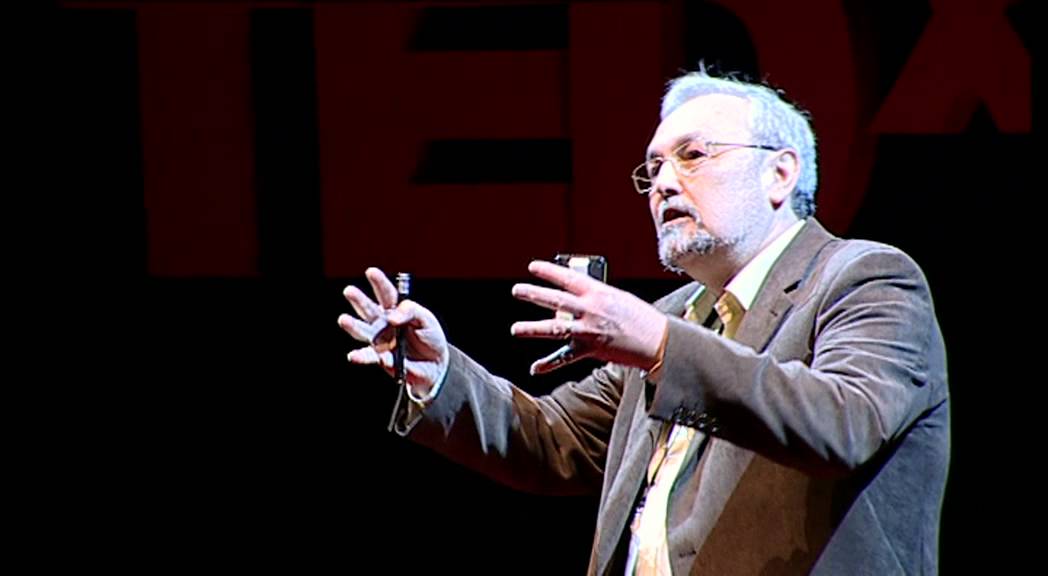 “If only there was an intelligence, maybe an artificial one, that could help people follow up…easily” — Robin Dunbar, Ted Talk, 2017
The Relationships That Fall Through the Gap Are Often the Valuable Ones
Mark Granovetter published “The Strength of Weak Ties” in 1973. The paper has over 70,000 citations and the core insight still holds: your close friends know what you know, but the people who bring you genuinely new information, new opportunities, and unexpected introductions are your weaker connections.
Granovetter identified the mechanism; Levin, Walter, and Murnighan, in a 2011 study of 224 executives, quantified the payoff. They had executives reconnect with contacts they hadn’t spoken to in three or more years and then rate the quality of those interactions. Dormant ties — relationships that were once active but went quiet — provided advice rated as useful as, or more useful than, advice from current relationships. The dormant contacts had the trust of a former close relationship combined with the information novelty of a distant one.
Rajkumar et al. took this from survey data to causal proof in 2022, published in Science. Twenty million LinkedIn users, two billion new connections formed, 600k new jobs tracked. The finding: “moderately” weak ties (people sharing roughly 10 mutual connections — not strangers but not your inner circle) produced the most job mobility. The relationship between tie strength and opportunity follows an “upside down U” shape — too close, and you already know everything they know. Too distant, and there’s no basis for trust. That sweet spot sits in the middle — which is exactly where relationships land after they’ve been active and then gone dormant.
“But aren’t people annoyed that I’m reaching out to them?” Turns out — no!
Liu et al. ran 13 experiments with over 5,900 participants between 2022 and 2023 with the question: “how do people feel about receiving unexpected outreach from someone they haven’t heard from in years?” The answer: far more positively than the sender expects. And the gap between expected and actual appreciation grows the longer the silence has lasted. The person you haven’t emailed in three years will be happier to hear from you than the person you emailed three months ago. Your brain tells you the opposite; your brain is wrong.
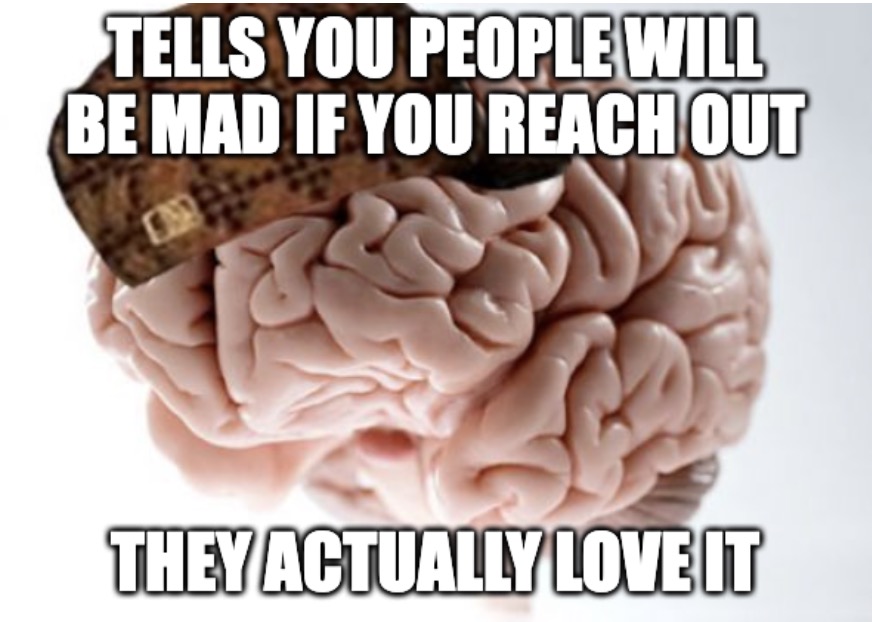 Scumbag Brain.
So here’s the situation:
- Fifty years of research, settled science, thousands of citations. Dormant ties are disproportionately valuable.
- People want to hear from you more than you think.
- Your brain physically cannot maintain enough relationships to prevent valuable ones from decaying.
The science pointed toward an obvious intervention: just help people identify which relationships are decaying, then make it easy to reconnect.
Why the Gap Existed (And Why It Closed)
So why hasn’t this been solved? Turns out the tools that exist in this space fall into two buckets, and neither bucket solves the problem.
The first bucket is a “system of record” called CRMs (customer relationship management software). These are digital rolodexes. They’re great at storing things, but they have no intelligence, and no agency. If you use them, you are the one telling them who matters. You are the one maintaining the data. You are the one setting the reminders. These CRMs are putting more work on your plate.
The second bucket is cold outreach tools. HubSpot sequences, sales automation, email campaigns. These help you reach strangers at scale — the opposite problem.
The gap between these two buckets is where the valuable dormant ties live. Relationships that were once warm, that have real history and shared context, that decayed through neglect rather than choice.
Filling that gap requires three technological capabilities that didn’t exist together until recently:
- Reading and understanding years of unstructured email history to assess which relationships were real (eg beyond people you exchanged logistics with)
- Evaluating relationship depth from conversational context (distinguishing “we had a genuine connection” from “we were cc’d together on a thread”)
- Generating reconnection messages that actually sound like the specific person, referencing specific shared history.
Until recently, the only thing that could do this work was another human. A chief of staff maybe. Or an executive assistant who’d been with you long enough to know which names mattered, why, and when the last time you chatted with them was. People at a certain level of seniority have always had this; they have someone who reads their inbox, remembers that you said you’d send Aruna who you had a negroni with at the conference those healthcare intros, and walks into your office Tuesday morning to remind you. The rest of us have been doing it ourselves, badly, with sticky notes and good intentions.
What changed? That work — that intelligence — on the relationship-maintenance side, reading conversations, inferring what matters, drafting the follow-up, is now something AI can do. Not a rules engine running keyword searches. Not a CRM waiting for you to type things into it. An actual reader; an actual intelligence. Something that understands the difference between a thread where you connected with someone and a thread where you cc’d them on logistics, and knows which one is worth revisiting.
But it still didn’t exist! So: I built one.
FollowUpEasy is an assistant who lives in your inbox. It reads what’s already there, notices the people you’ve lost track of, and on Monday morning puts a short list in front of you. Here are the eight people worth reaching out to this week, here’s why each one matters, and here’s a draft I wrote in your voice. You decide whether to send any of it. The judgment is still yours. The labor of remembering, retrieving, and drafting is not.
This category didn’t exist eighteen months ago because the technological capability didn’t exist. I wrote an essay called “The New Shape” about exactly this phenomenon: AI making whole categories of action possible that weren’t possible before, not as upgrades to old tools but as new things entirely.
The “assistant who reads your inbox” is one of them. Until someone could build a reader good enough to understand which conversations contained real connections, the role couldn’t be filled by anything that wasn’t a person. Now it can.
What I Built
How FollowUpEasy actually works: It scans your Gmail in two stages. The first stage looks at metadata: who you’ve emailed, how often, who replied, how long it’s been since either of you said anything. That’s enough to identify candidate relationships that were once active and have since gone quiet. The second stage is where the understanding happens. The AI reads the actual conversation history for the strongest candidates, figures out which threads contained real connection rather than logistics, and pulls out the specific moments worth referencing: the question you said you’d answer, the intro you promised, the thing they asked about that you never got back to.
Then it drafts the follow-up. The draft is shaped by a style profile built from your sent mail, so the greeting, signoff, sentence rhythm, and formality match the way you actually write. A separate quality filter to prevent generic AI slop runs after generation: the open-sourced Ramsay Filter, now wired into a production rewrite loop. Drafts that fail the rubric get sent back for up to three rewrites before any of it reaches you. What lands on your screen Monday morning is a short list. Six relationships on your first scan, five per week after that. Each one with a one-line note on what stood out, and a draft you can send, edit, or kill.
Nothing sends without your explicit review. You see the briefing card, you read the draft, you edit it or rewrite it or delete it, and you decide whether to send — just like you had an assistant. The human step isn’t a safety net bolted on after the fact. It’s where the product’s value gets realized, because you bring the judgment about whether this specific relationship is worth reactivating right now.
The Objections You’re Already Forming
“Some relationships go dormant for good reason.”
Totally! Levin et al. acknowledged this directly in their 2011 paper. The design principle I built around: when uncertain, under-surface. A false positive (surfacing someone you don’t care about) wastes your time and erodes trust in the product. A false negative (missing someone you’d want to email) is invisible. I’d rather FUE show you fewer cards that are all worth acting on than flood you with every contact that’s gone quiet. If a scan returns zero results for someone with an active network, that’s a success signal, meaning you’re maintaining relationships without help.
“This is a CRM.”
CRMs require you to already know who matters. You enter the contact, you tag the relationship, you set the follow-up cadence. FUE finds the people you’ve lost track of entirely. You can’t set a reminder for someone whose name you haven’t thought of in two years.
That said, the edges are blurry. Once FUE surfaces a dormant contact and you reconnect, you probably do want some kind of ongoing tracking. Whether FUE evolves toward that or integrates with tools that already do it is a product question I haven’t fully answered yet. I’m being honest about that because the alternative is pretending the categories are cleaner than they are.
“AI-generated reconnection emails will make networking feel transactional.”
Liu’s research cuts against this directly. The psychological barrier to reaching out is largely illusory. Recipients are happier to hear from you than you expect, and the gap grows with time. The bottleneck isn’t caring, and it isn’t sincerity. The bottleneck is the activation energy to open Gmail, figure out what to say, and write the email. That activation energy is highest for the people you feel most guilty about neglecting.
FUE removes the activation energy by putting a draft in front of you. You still have control over sending it, and you still edit it in your voice. But the blank-page problem disappears.
Rondi, Levin, and De Massis published in Organization Science in 2023 that reconnection fails when three elements are missing: remembering each other, catching up on relevant shared experiences, and perceiving the relationship similarly. FUE handles the first two by grounding the draft in real conversation history. The third, whether both people see the relationship the same way, is why the human review step is load-bearing.
Where I Am and What I’m Asking
I built FUE because I needed it. The scan of my own inbox was the prototype, and it worked well enough that I couldn’t not build the product.
The first reconnection email I sent through FUE got a reply within an hour. We’re having coffee next week. It only took two years.
Here’s where the product currently stands:
The product is in early beta, in production, real users connecting real Gmail accounts. Connecting is a normal Google sign-in.
New subscriptions are $50 a month. See the pricing page for current trial availability and terms. You choose whether to subscribe.
I’m happy to personally onboard every user right now. Reply to this email or DM me on LinkedIn and I’ll get you set up.
If you’re a founder, a VC, a recruiter, a BD lead, a salesperson, or anyone whose income correlates with the quality of relationships you maintain, this is built for you. The research says your network is decaying at a measurable rate, that the relationships falling away are disproportionately valuable, and that the people you’ve lost touch with want to hear from you more than you think.
I built the tool that I wish I’d always had; I’d like you to try it.
— Dave